Developing High-Retention Video Assets to Improve Organic Search Visibility Metrics
Search engine optimization increasingly demands more than just well-researched text. When visitors land on a comprehensive guide but leave within seconds, search algorithms register weak engagement signals, often leading to gradual ranking drops. The challenge lies in capturing attention immediately while satisfying the underlying informational need. Text-heavy layouts can overwhelm users, especially on mobile devices where reading requires continuous scrolling and sustained concentration. Integrating multimedia elements directly addresses this friction by offering alternative consumption methods, keeping visitors on the page longer and reducing overall bounce rates.
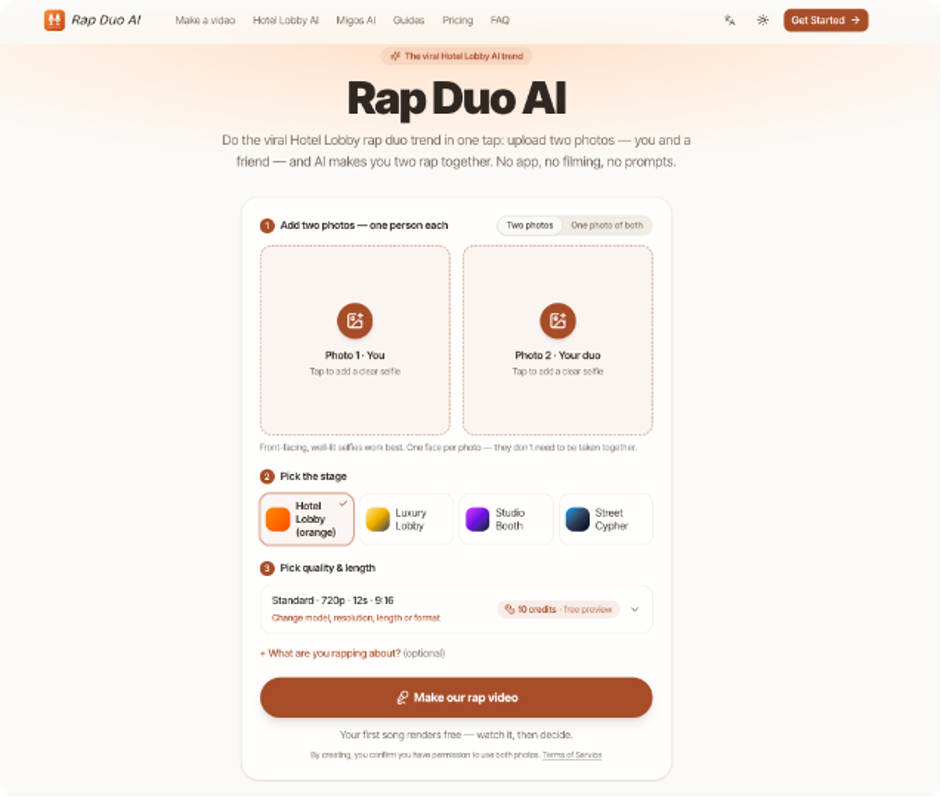
Standard advice frequently suggests embedding custom media, yet acquiring high-quality audiovisual assets usually involves managing expensive freelancers or navigating complex editing software. Site owners need practical ways to produce tailored media that directly supports their written material without creating massive production bottlenecks. Utilizing generative tools like Rap Duo AI provides an exploratory path for rapidly drafting these supplementary audio and visual components. By streamlining the initial creation phase, marketers can focus on strategically placing media where textual explanations fall short, ultimately building a more resilient and engaging user experience that search algorithms consistently reward over time.
Aligning Visual Content with Specific Search Intent Profiles
Every successful multimedia strategy begins by categorizing the underlying motivation behind a user’s search query. Visitors seeking step-by-step tutorials possess entirely different visual requirements than those comparing software pricing tiers. Content creators must diagnose the primary intent before allocating resources toward media production. For informational queries, diagrams and explanatory animations perform best because they simplify complex concepts. Conversely, transactional pages benefit more from product demonstrations and visual proof that build immediate trust.
Failing to match the media format to the search intent creates cognitive dissonance, causing users to abandon the page regardless of the video’s production value. A highly stylized, narrative-driven short film adds zero value to a technical troubleshooting guide. For instance, a comprehensive guide detailing software installation should feature screen recordings of the interface rather than generic stock footage of people typing on keyboards. This level of specificity directly answers the user’s implicit questions and reduces the likelihood of them returning to the search results to find a more helpful resource.
Establishing a clear visual hierarchy ensures that embedded media complements the surrounding text rather than competing with it for attention. The video should act as a natural continuation of the article’s premise. By deliberately mapping visual assets to specific intent categories, websites can signal to search engines that their page provides the most comprehensive and user-friendly answer available for that particular topic.
Establishing Production Workflows for Consistent Video Content Output
Systematizing the creation process prevents unnecessary delays and ensures each multimedia asset serves a distinct objective. Adopting a structured pipeline allows teams to scale their media efforts without sacrificing relevance.
- Map the Script to Search Query Intent
Before generating any media, outline a script that directly answers the secondary questions related to the main topic. A concise script prevents the final video from wandering off-topic and losing the viewer’s interest. Structure the narrative to hook the audience within the first five seconds by immediately stating what they will learn. This initial planning phase guarantees that the eventual visual output remains tightly focused on the core subject matter, thereby reinforcing the overall semantic relevance of the page.
2. Generate the Audio and Visual Draft Components
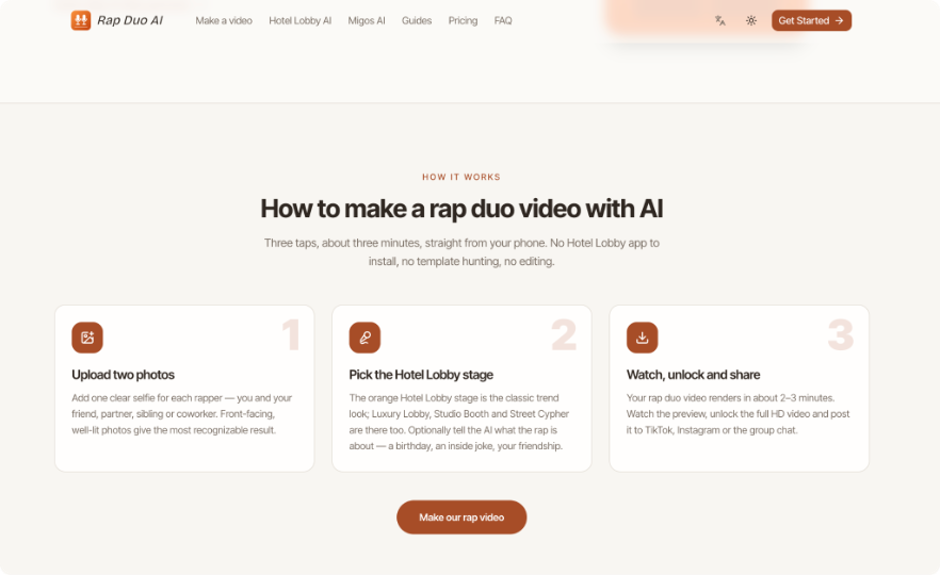
During the asset creation phase, generating synchronized media often presents a significant technical hurdle for small teams. Creators can utilize Rap Duo Video AI to bridge the gap between static text and engaging media formats. The process requires inputting a specific atmospheric mood, a structured script or rhythmic text, and preferred pacing parameters. The tool then executes the synthesis, aligning generated audio tracks with corresponding visual sequences. After this automated generation, content managers must carefully review the output to verify that the tone and tempo match the technical depth of the accompanying article, ensuring the media enhances rather than distracts from the core message.
3. Refine the Media for Cross Device Compatibility
Once the core assets are generated, adjust the formatting to ensure seamless playback across different screen sizes and network conditions. Mobile viewers often watch with the sound off, making clear typography and on-screen captions essential for comprehension. Compress the file sizes to maintain fast page load speeds, as heavy media elements can negatively impact core web vitals and overall search rankings. Optimizing these technical parameters ensures the content remains accessible to the broadest possible audience.
4. Analyze Audience Retention Drops During Initial Testing
Deploy the new media to a staging environment or a subset of live pages to gather preliminary performance data. Monitor the exact timestamps where viewers tend to pause, skip, or abandon the video entirely. Identifying these drop-off points provides actionable feedback for refining future scripts and visual transitions. Iterative testing allows creators to continually adjust their pacing and content delivery, maximizing the dwell time benefits that embedded media can provide.
Measuring Engagement Signals Across Different Distribution Channels
Evaluating the impact of multimedia additions requires looking beyond basic view counts and focusing on behavioral metrics that search engines prioritize. Average view duration serves as the most critical indicator of content quality. If a three-minute video consistently loses its audience after twenty seconds, the mismatch between the title, the surrounding text, and the actual media content demands immediate correction. Website owners should cross-reference video engagement data with page-level metrics like time-on-page and bounce rate. A successful media integration will demonstrate a measurable lift in the time visitors spend digesting the written guide.
Beyond localized page metrics, observing broader organic traffic trends in platforms like Google Search Console provides a macro perspective on performance. After embedding optimized videos, marketers should monitor the specific URLs for changes in primary keyword rankings and overall impression volume. Additionally, properly marked-up videos can secure rich snippets in search results, directly influencing click-through rates from the search engine results page. Correlating these external traffic improvements with internal engagement data paints a complete picture of how multimedia assets contribute to holistic domain authority.
Adjusting placement based on these signals maximizes return on investment. Sometimes, moving a highly engaging video from the bottom of an article to the first visible viewport dramatically improves overall page retention. By treating media placement as a dynamic variable rather than a static decision, marketers can continuously fine-tune their pages to satisfy search engine algorithms and human readers alike.
Developing Sustainable Frameworks for Multimedia Search Engine Optimization
Improving organic search visibility through multimedia requires a disciplined approach to planning, generation, and continuous technical optimization. Success stems from identifying exactly what type of media a specific query demands, systematizing the creation of synchronized audio and visual drafts, and rigorously testing the output against cross-device compatibility standards. When creators align their supplementary assets with the immediate informational needs of the reader, they transform passive text pages into highly engaging environments that naturally encourage longer browsing sessions.
The long-term advantage belongs to organizations that integrate media creation seamlessly into their standard editorial processes rather than treating it as an occasional afterthought. By establishing clear criteria for when and how to deploy interactive elements, teams can build a scalable content library that consistently satisfies complex search intents. This deliberate methodology builds deeper audience trust and establishes a resilient foundation for sustaining top-tier search rankings in an increasingly competitive digital landscape.